



DTF Printers in Boston for Professional Apparel Production
- Featured
- Most relevant
- Best selling
- Alphabetically, A-Z
- Alphabetically, Z-A
- Price, low to high
- Price, high to low
- Date, old to new
- Date, new to old
Recently Viewed Products
If you're trying to figure out which DTF printer actually fits your shop, not just the one with the flashiest specs, you're in the right place. We've been in this industry long enough to know that the wrong machine doesn't just waste money. It kills deadlines, frustrates customers, and turns your back room into a repair station.
This guide covers everything: how a DTF printing machine works, what the full setup actually costs, and which configuration makes sense depending on where you are in your business right now. If you're ready to browse machines, check the live collection at Bostonian DTF and then come back here to make sure the specs match your actual workflow.
Important Points
Before you scroll past this, these are the answers most people search for:
-
A DTF printer prints color and white ink onto coated film, which is then powdered, cured, and heat-pressed onto fabric
-
It works on cotton, polyester, fleece, canvas, and most blends, no white garment required
-
The current collection includes two-head ($10,999), four-head ($19,999), and five-head ($23,999) apparel models, plus UV DTF options for hard surfaces
-
You need more than just the printer: RIP software, film, powder, a curing unit, and a heat press are all part of the workflow
-
Inventory signals on the collection page conflict as of this writing, always confirm live stock before purchasing
-
Boston's Office of Small Business offers resources that can support equipment financing decisions
What Does a DTF Printer Actually Do?
A Direct to Film printer doesn't print directly onto a shirt. That's the first thing most people get wrong. Instead, it prints your design onto a coated film roll, first in color, then with a white ink underbase layer that makes the design pop on dark and colored fabrics.
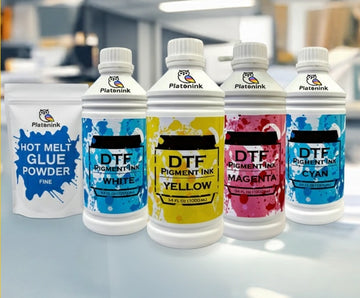
After printing, hot-melt adhesive powder gets applied to the wet ink. The film runs through a curing unit to bond the powder. Then you've got a finished transfer that can be stored, shipped, cut, and pressed onto garments as orders come in. It's a surprisingly flexible system once you understand the flow.
What fabrics does DTF work on?
Unlike sublimation, DTF doesn't need a white garment or a high polyester content to work well. Cotton, polyester, fleece, canvas, and blended fabrics all handle DTF transfers cleanly in most cases.
That said, fabric coatings, stretch, texture, and heat sensitivity can all cause issues. We always say: test your actual blank before committing to a 500-piece customer run.
What Else Do You Need Besides the Printer?
This is where a lot of first-time buyers get surprised. A DTF printing machine is one piece of a production line, not a standalone unit. Here's what the full system looks like:
Equipment |
Main Role |
What to Verify |
|
Printer |
Prints color and white ink layers |
Print width, head count, output speed, voltage |
|
RIP software |
Controls color profile and white ink |
License type, computer compatibility |
|
Coated film |
Carries the transfer image |
Width, coating type, peel style |
|
Adhesive powder |
Bonds the ink to fabric |
Particle size, compatibility with your ink |
|
Shaker and dryer |
Powders and cures film automatically |
Speed, heat output, ventilation needs |
|
Heat press |
Applies the finished transfer |
Platen size, pressure range, temperature accuracy |
|
Maintenance tools |
Protects the ink system |
Printer-approved cleaning products only |
The printer and curing unit need to match in throughput. A fast commercial DTF printer paired with a slow curing unit just creates a bottleneck ; and that bottleneck will frustrate you every single day.
How Do You Pick the Best DTF Printer?
Honestly? The best DTF printer is rarely the most powerful one in the catalog. It's the one that matches your real order volume today, with room to scale.
Start with these numbers: how many transfers do you expect to produce each week? What's the widest design you'll regularly print? How much time can you realistically dedicate to daily maintenance? Those three answers will narrow the field faster than any spec sheet.
Does print width really matter that much?
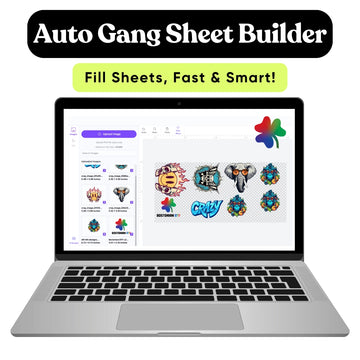
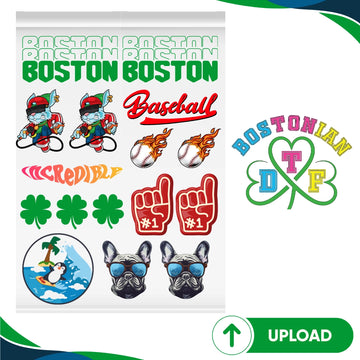
It does. Print width affects how efficiently you can lay out gang sheets, and gang sheet efficiency is where your per-unit cost either gets competitive or doesn't. Wider machines let you nest more graphics per roll ; but they also use more film, more ink, more powder, more floor space, and more power.
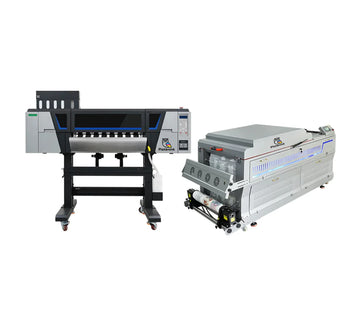
The two-head model in the current collection lists a 17-inch printing width. For other models, check each product page directly, because head count alone doesn't tell you the usable print width.
What's the right number of printheads?
A dual head DTF printer is a solid starting point for a shop that's growing but isn't yet running full shifts. The two-head listing currently uses two i3200-A1 printheads with CMYKW ink and lists output at 30 square feet per hour.
Four-head and five-head machines push higher volume. But more printheads also mean higher acquisition cost, more maintenance touchpoints, and more expensive replacements when something goes wrong. Don't buy headcount you can't keep busy.
How Do the Current Apparel Models Compare?
The collection currently shows three apparel-grade DTF printing machines at different price points. These prices reflect the hardware only; shipping, installation, software, starter supplies, and curing equipment may not be included, so always request an itemized quote.
Model |
Listed Price |
Best Fit |
|
Two-head apparel printer |
$10,999 |
Smaller shops and growing output |
|
Four-head apparel printer |
$19,999 |
Mid-volume commercial production |
|
Five-head apparel printer |
$23,999 |
High-volume or multi-shift operations |
One thing worth noting: as of our last review, the collection filter reports five in-stock products while every individual product card shows Sold Out. Treat availability as unconfirmed until you can physically add the item to your cart or get written confirmation from the team.
Is a Commercial Machine Right for a Small Shop?
Short answer: maybe. A DTF printer for small business makes real sense when you have consistent transfer demand, controlled workspace, and at least one person who can own the machine operationally.
We've seen shops try to run a commercial DTF printer as passive equipment, and it doesn't work. White ink needs to circulate. Nozzles need daily inspection. Film alignment, powder levels, curing temperature, ink waste tanks ; all of it needs attention. The machine is a team member, not an appliance.
If you're doing sporadic or seasonal work, buying wholesale transfers may be a smarter financial decision than taking on a machine and all its overhead. But if you're fulfilling orders weekly, the control over turnaround time and artwork changes alone often justifies the investment.
What Do "Automatic" and "Roll-to-Roll" Actually Mean?
These two terms get thrown around a lot, and they don't always mean the same thing across brands.
An automatic DTF printer typically refers to automation features like continuous film feeding, white-ink circulation during idle periods, or automatic connection to a powder shaker and curing system. It reduces manual handling. It does not reduce the need for an attentive operator.
A roll to roll DTF printer feeds continuous film from a supply roll through the machine and onto a take-up roll. This matters for production efficiency because it allows longer uninterrupted print runs without stopping to reload film. Gang sheets especially benefit from this setup.
Before you buy, ask the seller to define exactly what "automatic" means for the specific model. Product terminology in this industry is not always standardized, and that ambiguity has burned more than a few buyers.
Is DTF the Right Choice for T-Shirt Production?
A DTF printer for T-shirt printing handles the work that screen printing struggles with: full-color designs, gradients, photographic images, fine text, individual names, and small runs with varied artwork.
A professional DTF printer in a well-run production room can produce consistent, durable transfers across dozens of garment types without a screen, emulsion, or color separation fee.
For simple one-color designs in very large quantities, screen printing may still win on cost per unit. For mixed artwork, short runs, personalization, and fast turnaround, DTF typically reduces setup steps and gives you more flexibility.
When Does an Industrial Machine Make Sense?
An industrial DTF printer makes sense when your production room has trained operators, stable daily volume, a curing unit that can keep up, and a parts inventory plan.
Don't size up for speed numbers you haven't earned yet. Calculate your real usable hourly output after file preparation, maintenance windows, film changes, powdering, curing, cutting, pressing, and packing. The slowest stage in that chain sets your actual production speed, regardless of what the printer spec sheet says.
What are the environmental requirements?
The two-head model's product page lists a footprint of roughly 53 by 28 by 38 inches and a weight of 200 pounds. It recommends a dust-free environment with temperatures between 60°F and 85°F and relative humidity between 46% and 65%.
Boston winters can dry a production room fast. Summer humidity, especially in older commercial spaces near the waterfront or in Jamaica Plain and South Boston, can push conditions the other way. Monitor your environment actively. A $30 hygrometer saves you from a lot of expensive nozzle clogs.
What Safety Requirements Apply to a DTF Print Shop?
Printing environments involve heated equipment, chemical products, fine powder particles, high-draw electrical loads, and repetitive physical handling. The Occupational Safety and Health Administration's printing industry guidance covers chemical hazards, ventilation requirements, electrical safety, fire protection, and personal protective equipment.
Read your ink and powder safety data sheets. Keep chemicals labeled and sealed. Use qualified electricians and HVAC professionals when setting up your power and ventilation. Boston's local building, fire, electrical, and waste regulations may also apply depending on your space classification.
"The machine prints the film. The production system determines whether the order ships on time."
10 Things You Should Confirm Before Buying?
Work through this list before you commit to any purchase:
-
Estimate your actual weekly and monthly transfer demand
-
Confirm usable print width for your largest design
-
Compare printhead count against realistic replacement costs
-
Request an itemized list of everything included in the purchase price
-
Verify RIP software compatibility with your existing computer setup
-
Check power requirements, ventilation specs, doorway clearance, and floor load
-
Confirm compatible ink, film, and powder sources
-
Review the warranty, freight terms, installation support, and training offered
-
Price out routine maintenance parts and ongoing supply costs
-
Get live inventory confirmation in writing before announcing a start date
Conclusion
A DTF printer gives a Boston apparel business real control over full-color transfer production, short runs, gang sheets, personalized work, and same-day reprints. That control is valuable. It's also earned through planning, not just purchasing.
The right machine is the one that fits your actual volume, your space, your team, and your maintenance capacity. Bigger isn't automatically better. Cheaper isn't automatically smart. The current collection shows three apparel-grade options across three price tiers, but inventory status conflicts as of this writing, so confirm availability before making commitments to clients or timelines.
Ready to Choose a DTF Printer for Your Boston Apparel Workflow?
Whether you're setting up your first production line or upgrading an existing setup, the right move is to match the machine to the work you actually have. Browse the DTF printer collection at Bostonian DTF, then reach out to confirm live stock, what's included, installation requirements, and whether the model fits your production room before you buy.
FAQs
What does a DTF printer do?
A DTF printer produces color and white-ink designs on coated film. The printed transfer is powdered, cured, and then applied to fabric using a heat press.
Are DTF printers currently in stock at Bostonian DTF?
The collection filter reported five in-stock items during our last review, but every visible product card showed Sold Out. Contact the team directly to confirm live availability before purchasing.
Is a dual-head DTF printer suitable for a small shop?
It can be, when its output, print width, maintenance requirements, and total system cost match your expected order volume and staffing capacity.
What equipment do I need alongside a DTF printer?
A complete setup needs RIP software, compatible ink, coated film, adhesive powder, a shaker and curing unit, a heat press, maintenance products, and a capable computer to run the RIP.
What is a roll-to-roll DTF printer?
A roll to roll DTF printer feeds continuous film through the machine from a supply roll to a take-up roll, enabling longer print runs without stopping to reload.
Does an automatic DTF printer still need maintenance?
Yes. Automatic features reduce manual steps, but operators must still monitor ink levels, nozzle condition, film feeding, powder application, curing temperature, and cleaning cycles.
Can DTF transfers be applied to cotton and polyester?
DTF works on cotton, polyester, fleece, canvas, and most blends when the materials and heat-press settings are compatible. Always test your specific blank before a large production run.
Is a commercial DTF printer worth the investment for a small business?
It can be, when stable order volume, suitable workspace, trained staff, maintenance capacity, and realistic margins all support the total cost of ownership.