



DTF Printers & Supplies in Boston for Professional Apparel Printing
- Featured
- Most relevant
- Best selling
- Alphabetically, A-Z
- Alphabetically, Z-A
- Price, low to high
- Price, high to low
- Date, old to new
- Date, new to old
Recently Viewed Products
Nobody tells you this when you start researching Direct to Film printing: the printer is the easy part. The ink, the film, the powder, the curing setup, the RIP software, the press, the room temperature, the ventilation... that is the actual job. We learned that the hard way, and we built this guide so you do not have to. For Boston print shops, clothing brands, and apparel businesses ready to bring production in-house, Bostonian DTF carries DTF Printers & Supplies at https://bostoniandtf.com/collections/dtf-printers-supplies with current inventory, setup guidance, and real technical support behind every order.
At a Glance
DTF Printers & Supplies cover the full production chain: a DTF Printer, compatible color and white ink, coated PET Film for DTF Printing, Hot Melt Powder for DTF, curing equipment, a heat press, RIP software, plus cleaning and maintenance materials. As of the latest review, the collection filter shows 11 in-stock items while visible product cards are marked Sold Out. Treat availability as unconfirmed. Check each specific item by adding it to the cart before building any production schedule around it. Printer prices on the page currently range from $10,999 to $23,999. Ink and powder are listed around $34 to $35 per unit. These figures can shift.
What Does a Full DTF Setup Actually Need?
People see a product photo of a printer and assume that is the system. It is not. It is one piece of a connected production line where every part affects every other part.
A working DTF Equipment setup runs through this chain: artwork preparation on a compatible computer, color management through RIP software, printing onto coated film, powder application, curing, transfer storage, heat pressing, and finished garment handling. Pull one link out and the whole thing stalls.
What the Supply Side Includes
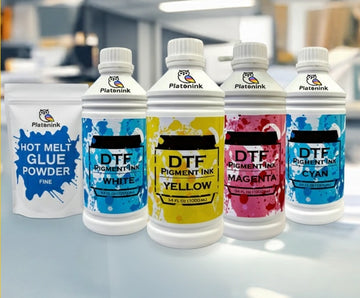
DTF Printer Supplies break into two groups. There are production supplies you consume every day: ink, film, powder. Then there are maintenance supplies you reach for when something is off: cleaning solution, swabs, wipes, replacement caps, wiper blades, and waste containers.
Most shops budget for the production side and forget the maintenance side. Then the printhead clogs mid-order and everything stops. Stock both from day one.
Equipment or Supply |
Purpose |
What to Confirm |
|
DTF Printer |
Prints color and white ink onto film |
Width, head count, voltage, footprint |
|
RIP Software |
Manages color layers and white channel |
Computer compatibility, license terms |
|
PET Film for DTF Printing |
Carries the printed design |
Coating type, peel method, width |
|
Hot Melt Powder for DTF |
Bonds the transfer to fabric |
Particle size, curing requirements |
|
Powder shaker and dryer |
Applies powder, cures transfer |
Power needs, ventilation, floor space |
|
Heat press |
Applies the finished transfer |
Platen size, pressure range |
|
DTF Consumables |
Cleaning and routine maintenance |
Ink system compatibility |
How Do You Choose the Right DTF Printer?
Start with your real order volume. Not the volume you hope to hit in a year. The volume you are producing right now, or will produce in the next three months.
A small brand testing short merch runs does not need the fastest Commercial DTF Printer on the market. A print shop running daily gang sheets for multiple clients will outgrow an entry-level unit inside a season. We have seen both mistakes happen, and neither one is cheap to fix.
Print Width Changes Everything
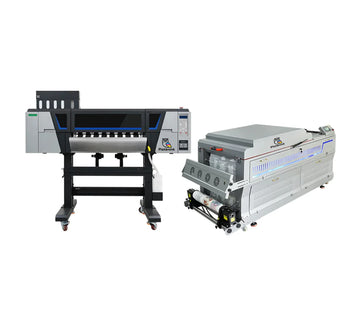
Wider print widths allow larger artwork plus more transfers across each row. That matters for gang-sheet efficiency. The current collection includes a two-head listing with a 17-inch print width. Other models should be reviewed separately because head count alone does not define the usable print area.
Printhead Configuration and Real Output
More printheads can mean faster output or separated white and color channels. A Professional DTF Printer with four or five heads may support heavier production, but it also means more maintenance, more replacement exposure, and more cost when something goes wrong. Match the machine to the workflow you actually have, not the workflow that looks impressive in a spec sheet.
What Is Currently in the Collection?
The page presents two-head, four-head, and five-head apparel printer models plus 16-inch and 24-inch UV DTF printer listings. On the supply side, white, cyan, magenta, yellow, and black inks appear alongside DTF Powder. No standalone PET film product is visible. Confirm film availability before purchasing a printer.
Every visible card showed Sold Out at the time of review despite the filter reporting stock. For a purchase at this price point, confirm the exact model, lead time, included items, warranty terms, freight method, and installation process in writing before paying.
Which DTF Printing Supplies Matter Most?
All of them matter. But white ink is the one that causes the most production headaches.
DTF Printing Supplies include color ink, white ink, film, powder, cleaning solution, swabs, wipes, protective sheets, and model-specific parts. White ink pigment settles when the bottle sits still. The current product guidance recommends storing it sealed, upright, in a cool dark space, and mixing it before use. Follow that guidance consistently. A clogged white channel on a busy Friday is exactly as bad as it sounds.
Why Ink Compatibility Cannot Be an Afterthought
Not every ink works in every machine. Viscosity, pigment load, and channel requirements vary. Mixing inks from different sources can affect flow, color profiles, and printhead condition. Switching ink systems later may require a full flush plus new color profiling. Confirm compatibility before the first bottle goes in.
What Does Adhesive Powder Actually Do?
DTF Powder is the layer that makes the transfer stick. It sits on top of the wet ink after printing, gets cured by heat, and then bonds to fabric under the heat press.
Hot Melt Powder for DTF needs even coverage. Too little creates weak adhesion that fails in the wash. Too much leaves rough edges plus visible adhesive residue outside the design. The particle size also matters. Match it to the ink system, the fabric range, and the curing setup rather than just grabbing the cheapest bag.
Should You Buy a DTF Printer Bundle?
A DTF Printer Bundle looks appealing because it seems complete. Sometimes it is. Sometimes the photo shows more than the actual purchase includes.
Before committing, request an itemized list covering every component:
-
Printer model and confirmed print width
-
Powder shaker and dryer, or separate purchase required
-
RIP software license and computer requirements
-
Starter ink volume included
-
PET film and powder included, or separate
-
Training format and duration
-
Freight, delivery method, and installation responsibility
-
Warranty coverage and printhead terms
-
Lead time to delivery
-
Support contact and response process
An itemized quote takes ten minutes to request. It saves the kind of surprise that arrives after the machine does.
What Workspace and Power Do You Need?
Direct to Film Printing Equipment is not desk equipment. The current two-head listing shows a printer footprint of roughly 53 by 28 by 38 inches and a weight of 200 pounds. It lists separate electrical requirements for the printer and powder shaker. Those numbers apply to that model only.
Measure every door, hallway, outlet, and ventilation path before equipment ships. A machine that cannot reach the production room is still the wrong machine.
Temperature and Humidity in a Boston Print Room
The current two-head listing recommends a dust-free room between 60°F and 85°F with relative humidity from 46% to 65%. Boston winters push indoor air dry when heating runs hard. Boston summers swing the other way. A basic hygrometer costs almost nothing. A failed print run from humidity swings costs considerably more.
Safety and Compliance for Boston Print Shops
DTF production involves UV-curable inks, adhesive powders, heated equipment, electrical loads, and chemical maintenance products. The Occupational Safety and Health Administration printing industry guidance covers chemical hazards, ventilation, electrical safety, fire safety, machine guarding, and personal protective equipment as relevant concerns for print operations.
Read every safety data sheet for inks, powders, and cleaning products. Train staff before they handle chemicals or operate equipment. Use appropriate ventilation near curing units and powder stations. For electrical permitting, fire compliance, or workplace safety questions, consult qualified local professionals.
Who in Boston Is This Equipment Actually For?
A Roxbury clothing brand wanting control over short merchandise drops. A Dorchester print shop needing to expand gang-sheet capacity. A South Boston contractor producing staff uniforms in-house. A Jamaica Plain nonprofit printing event shirts on a tight budget.
The City of Boston Small Business Office supports local businesses with programs and technical resources. Equipment buyers should approach the purchase the same way: plan the production workflow first, confirm the volume supports the cost, then choose the machine.
"A printer solves one part of the production problem. The system is everything else around it."
Conclusion
DTF Printers & Supplies can give apparel businesses real control over full-color transfer production. The printer starts that process. Compatible ink, coated film, DTF Powder, curing equipment, software, heat pressing, trained staff, and a suitable workspace finish it.
Current inventory on the collection page conflicts. Confirm every item, its availability, and its specifications before placing an order or setting a production launch date.
Shop DTF Printers and Supplies for Your Boston Print Operation
Ready to build an in-house transfer setup or restock essential DTF Printing Supplies? Review current inventory, confirm stock and setup requirements, and build your production plan with Bostonian DTF at https://bostoniandtf.com/collections/dtf-printers-supplies before placing any order.
FAQs
What does a complete DTF setup require?
A working setup needs a DTF Printer, RIP software, compatible color and white ink, PET Film for DTF Printing, Hot Melt Powder for DTF, curing equipment, a heat press, plus cleaning and maintenance supplies.
Are the DTF printers currently in stock?
The collection filter reported 11 in-stock items during the latest review while all visible product cards showed Sold Out. Confirm each specific item by adding it to cart or contacting the store directly.
What makes white ink different from color ink?
White ink carries heavy pigment that settles when the bottle is still. It needs regular agitation and careful storage plus daily circulation in the printer to prevent clogs. It is the most maintenance-intensive part of any DTF ink system.
Is PET film included with a DTF printer?
No PET film product was visible in the current collection. Do not assume film is bundled with a printer. Request an itemized list of everything included before purchasing.
What does DTF adhesive powder do?
DTF Powder bonds the printed ink layer to the garment during heat pressing. It must be applied evenly and cured at the correct temperature to produce consistent adhesion across the full design.
What should a DTF Printer Bundle include?
A reliable DTF Printer Bundle should include the printer, powder shaker, curing dryer, RIP software license, starter ink, film, powder, training, and installation support. Always confirm the full item list in writing.
How often does a DTF printer need maintenance?
Most systems need daily nozzle checks, white ink circulation, cap and wiper cleaning, plus regular waste-system monitoring. Maintenance frequency depends on usage volume and the specific model.
Is a Commercial DTF Printer right for a small Boston business?
A Commercial DTF Printer suits businesses with consistent weekly order volume, adequate workspace, proper electrical service, trained operators, and a production plan that supports the equipment cost. Build the plan before buying the machine.