



Sublimation Transfers in Boston for Full-Color Polyester Printing
- Featured
- Most relevant
- Best selling
- Alphabetically, A-Z
- Alphabetically, Z-A
- Price, low to high
- Price, high to low
- Date, old to new
- Date, new to old
Recently Viewed Products
Sublimation transfers are not like other heat press methods. The ink does not sit on top of the fabric. It goes into it. Heat converts the dye into gas; that gas bonds with polyester fibers at the molecular level, and the result is a print that feels like part of the shirt because technically... it is. No raised edges, no cracking, no layer to peel off after a few washes.
For Boston print shops, sports teams, fitness studios, event organizers, and apparel brands that need full-color performance prints, explore the custom sublimation transfers and gang sheet collection at Bostonian DTF, built for professional polyester production with fast turnaround across Massachusetts.
Before You Order
What are sublimation transfers? Printed designs using sublimation dye on coated sublimation paper, heat-pressed onto polyester fabric or polymer-coated blanks. The dye converts to gas under heat and bonds permanently with compatible material.
What fabrics work? White and light-colored polyester, polyester blends, and polymer-coated hard blanks. Cotton does not bond with standard sublimation dye.
Why does the finish feel different? Because dye sublimation printing has no surface layer. The design becomes part of the material, which is why sublimated shirts feel exactly like unprinted shirts.
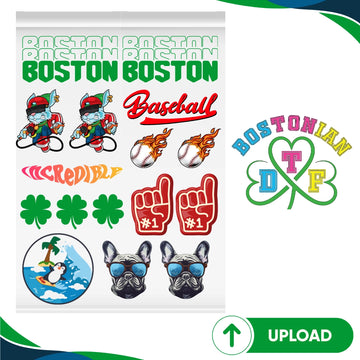
What is a sublimation gang sheet? A single large transfer sheet containing multiple designs, sizes, names, or logos arranged in one layout. One press run covers multiple pieces.
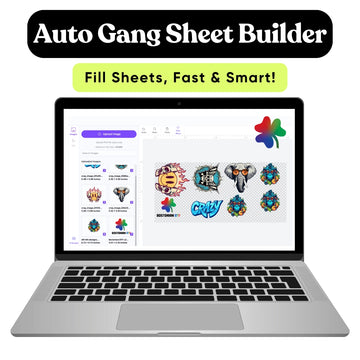
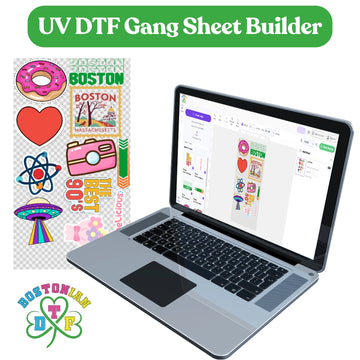
Can I arrange my own gang sheet? Yes. A sublimation gang sheet builder lets you place separate artwork files into a layout online. Or upload a pre-built sheet directly.
What is the word count? About 1,460 words in body content.
What Actually Happens During Sublimation Printing?
Most people understand heat pressing on a surface level. Sublimation works differently at the chemistry level, and it is worth knowing why, because it changes what you can and cannot do with this method.
Dye sublimation printing uses a phase change. The dye skips the liquid phase entirely and converts from solid to gas when heated. That gas penetrates open polymer structures in the polyester fabric. When the heat press opens and the garment cools, those polymer structures close and lock the dye inside.
Why This Matters for Print Quality
Because the dye is embedded, not applied, sublimation printing produces prints that flex with the fabric, breathe with the wearer, and hold color through dozens of wash cycles without degrading. There is no surface layer to stretch, crack, or peel.
Per Wikipedia's technical overview of direct-to-film and dye sublimation printing, heat press sublimation typically operates at 160 to 170 degrees Celsius (approximately 320 to 338 degrees Fahrenheit) for 10 to 15 seconds, with time, temperature, and pressure varying by blank type and manufacturer specification.
Which Fabrics and Blanks Work With Sublimation?
This is the question that saves people from expensive mistakes. Not every fabric takes sublimation dye. Not every light-colored shirt is a safe choice.
Polyester sublimation printing performs best on white or near-white polyester fabric. The higher the polyester percentage, the brighter and more accurate the final color. A 100% polyester performance shirt gives you the full effect. A 50/50 cotton-poly blend gives you a softer, washed-out, vintage-style result. Some buyers actually want that look. Most do not.
|
Garment or Blank |
Expected Result |
Key Consideration |
|
White 100% polyester shirt |
Bright, accurate full color |
Best apparel match |
|
Light polyester shirt |
Clean color with garment tint |
Shirt base color shifts the artwork |
|
Polyester-cotton blend |
Soft or vintage-toned result |
Lower poly content = lighter color |
|
Dark polyester garment |
Limited visibility |
No white underbase in sublimation dye |
|
Plain cotton shirt |
No standard sublimation bond |
Use DTF transfers instead |
|
Polymer-coated hard blank |
Strong when correctly specified |
Confirm blank is sublimation-compatible |
Test the exact blank before committing to a production run. Fabric finish, dye saturation, moisture level, and press calibration all shift the result in ways that a screen preview will not show you.
What Can You Make With Custom Sublimation Transfers?
Custom sublimation transfers cover a wide range of Boston-area use cases. Running clubs training along the Charles River need lightweight event tees. Fitness studios in the Seaport want staff performance tops that look sharp without adding weight. Youth sports leagues in Dorchester need numbered polyester jerseys for a full season. Dance programs in Cambridge need custom sublimation designs on stretch fabric that moves without restriction.
Where Boston's Seasonal Demand Hits Hardest
The 2025 Boston Marathon drew runners and support crews from across the country, and the custom apparel demand around events like that runs months in advance. Add graduation season in May and June, summer youth programs, fall sports kickoff, and Boston Fashion Week each October, and you have a calendar that keeps polyester apparel production busy year-round.
Custom sublimation transfers work for sports jerseys, event tees, performance staff shirts, school team apparel, branded fitness gear, polyester tote bags, sublimated flags, and promotional soft goods. The short version: if it is white or light polyester, sublimation is probably the right call.
How Does a Custom Sublimation Gang Sheet Work?
A custom sublimation gang sheet is a single large transfer containing multiple designs in one layout. Instead of ordering each graphic separately, you nest everything together: names, chest marks, sleeve prints, repeated logos, multiple sizes, all into one sheet. One press run. Less waste. Lower cost per piece.
Builder vs. Direct Upload: Which One Is Right for You?
A sublimation gang sheet builder works best when you have separate artwork files that need to be arranged into a layout. You drag, drop, resize, and position each design, then submit. If your layout is already complete in design software, a direct upload gets the job done faster.
|
Ordering Method |
Best For |
What You Control |
|
Sublimation gang sheet builder |
Separate artwork files |
Placement, quantity, size |
|
Ready-built upload |
Completed layout file |
Full sheet design |
|
Narrower sheet format |
Small or mixed-size runs |
Compact layout planning |
|
Wider sheet format |
Larger production batches |
More artwork per sheet row |
Wholesale sublimation transfers ordered as gang sheets give print shops, decorators, and team outfitters a practical way to handle repeat logos, seasonal artwork, and bulk orders without paying per-design pricing on every piece.
How Should Your Artwork Be Set Up for Sublimation Designs?
Clean sublimation designs start long before the heat press. File quality is what determines whether the final print looks sharp or looks like a problem.
Use 300 DPI resolution at the final print size. Not 300 DPI at a small thumbnail size that gets scaled up. Actual final print dimensions, actual 300 DPI. Check for transparent backgrounds, stray pixels, spelling errors, and incorrect color profiles. Sublimation paper will often look muted before pressing because the dye activates under heat. What looks pale on the transfer frequently presses vivid on the garment. Do not adjust your artwork darker to compensate or you will end up with oversaturated results.
One More Thing on Color Matching
Sublimation color output varies by monitor, printer, paper, ink system, garment, and press. If a specific brand color must be closely matched for a client order, test print first. Chasing a Pantone match on sublimation without a test run is a gamble. We have seen it go wrong enough times to say it plainly.
How Do Sublimation Heat Transfers Compare to DTF Transfers?
This question comes up constantly, and the honest answer is: they are not competing methods. They are different tools for different jobs.
Sublimation heat transfers bond dye into compatible polyester. Custom heat transfers like DTF apply a printed adhesive layer on top of the fabric, which is why DTF works on cotton, dark garments, and fabrics with low or no polyester content.
|
Printing Need |
Sublimation Transfers |
DTF Transfer |
|
White polyester apparel |
Excellent fit |
Also works |
|
Cotton apparel |
Not compatible |
Strong fit |
|
Dark garments |
Limited, no white underbase |
Strong fit |
|
Print feel on fabric |
Smooth, part of the fabric |
Thin surface adhesive layer |
|
Stretch and flex |
Moves with fabric |
Flexible but surface layer present |
|
Polymer-coated hard blanks |
Compatible |
UV DTF for hard surfaces |
The garment, the fabric content, and the color of the blank determine which method is correct. Neither replaces the other.
"A clean sublimation result begins with the right fabric, not with the heat press. Press settings are the last variable. Polyester content is the first."
Pre-Order Checklist: Eight Steps Before You Submit
Boston's Office of Small Business notes on its resources page that growing businesses benefit from structured workflows that reduce error and support repeatable outcomes. That applies directly to sublimation production. A fast check before you submit saves a reprinted batch later.
-
Confirm the blank is white or light-colored polyester or a polymer-coated sublimation-compatible surface.
-
Check the polyester percentage and note how it will affect color saturation.
-
Set every design file to its final print dimensions at 300 DPI.
-
Review artwork for stray pixels, transparent backgrounds, and spelling.
-
Leave trimming space between designs on gang sheets.
-
Confirm whether the file should be mirrored before submission.
-
Calibrate or verify your heat press temperature and pressure before the run.
-
Test one piece before pressing a full production batch.
Frequently Asked Questions
What are sublimation transfers?
Printed designs using sublimation dye on coated transfer paper. Heat converts the dye into gas that bonds permanently with polyester fibers or polymer-coated blanks, creating a smooth, embedded print.
What fabric works best with sublimation?
White or light-colored polyester. A higher polyester percentage produces brighter, more accurate color. Cotton does not bond with standard sublimation dye.
Can sublimation transfers be used on dark shirts?
No. Sublimation dye is transparent and contains no white underbase. For dark garments, DTF transfers are the correct method.
What is a sublimation gang sheet?
A single large transfer containing multiple designs, sizes, names, or logos in one layout. One press run covers multiple garments.
Should sublimation artwork be mirrored?
Yes, typically. Confirm with the ordering workflow, as some suppliers handle mirroring in production. Check before submitting.
Why does sublimation transfer paper look dull before pressing?
The dye activates under heat. What looks muted on the paper converts to full, vivid color once pressed onto compatible polyester.
Are sublimation and DTF transfers interchangeable?
No. Sublimation works on polyester and polymer-coated blanks. DTF works on cotton, polyester, blends, and dark garments. Different tools, different jobs.
What heat press settings should I use?
Follow the instructions supplied for the exact transfer and blank. A common starting point for polyester fabric is around 385 to 400 degrees Fahrenheit for 45 to 60 seconds at medium pressure, but always confirm with your specific supplier and test before a full run.
Order Sublimation Transfers Built for Boston Printing Workflows
Need full-color sublimation printing for performance apparel, sports teams, event shirts, staff gear, or repeat wholesale production? Shop custom sublimation transfers and gang sheet options at Bostonian DTF. Choose the sheet format that fits your artwork, your blank, and your production schedule. Fast shipping across Massachusetts. No minimums. Upload your layout or build your sheet directly and get pressing.